



Branches Near You
Find dental care near you, with coverage in various areas of Mexico City.

A complex dental case cannot be resolved with a quick examination or isolated treatments. When you have tooth loss, insufficient bone, bruxism, severe wear, pain when chewing, unstable dentures, or multiple diagnoses at the same time, you need a dental clinic that can assess your entire mouth, prioritize treatment, and design a phased treatment plan.
At La Clínica Dental, complex cases are evaluated using digital diagnostics, a coordinated team of specialists, and a clear treatment plan: diagnose, stabilize, restore, and maintain.
We are a dental network in Mexico City focused on addressing cases where aesthetics, function, implants, bite, and oral health must be planned together.
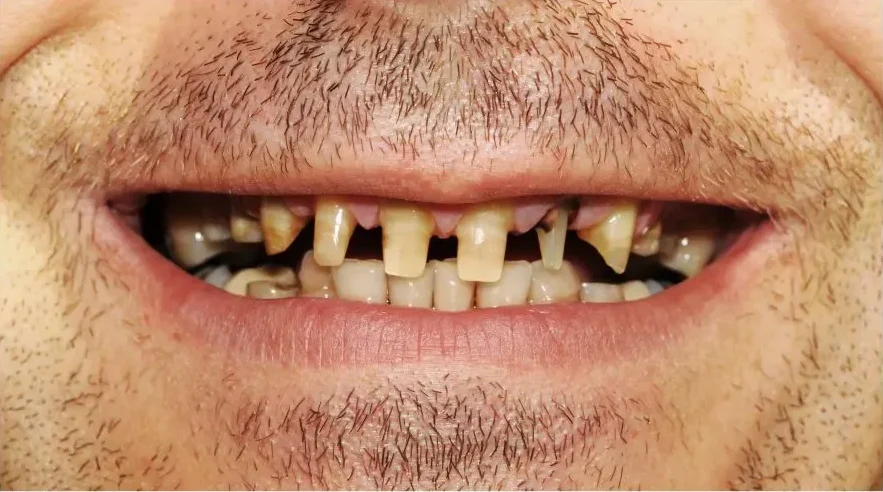
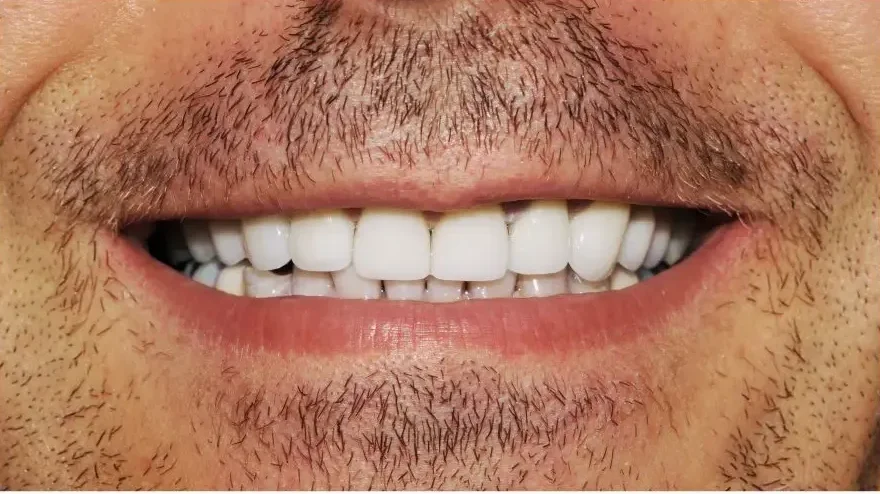
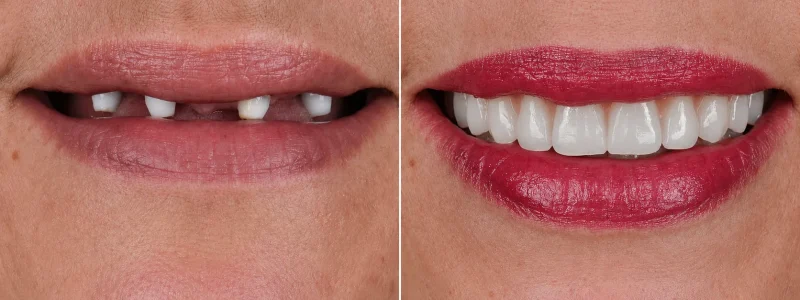
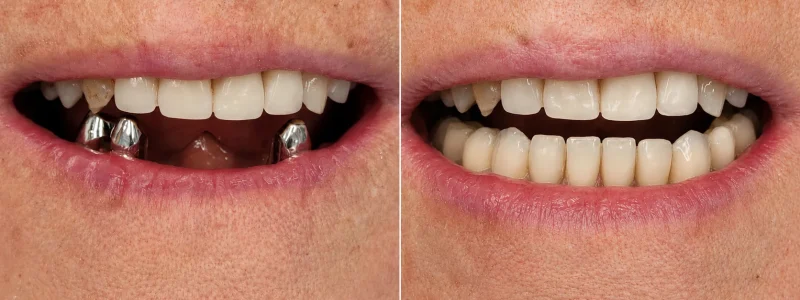
A complex dental case is a situation in which several dental problems occur at the same time and require a comprehensive diagnosis. It may include the loss of multiple teeth, periodontal disease, insufficient bone for implants, bruxism, severe wear, an unstable bite, poorly fitting dentures, pain when chewing, or the need to combine implants, crowns, orthodontics, cosmetic dentistry, and oral rehabilitation.
The difference between a simple case and a complex one lies not only in the number of teeth involved. It lies in the need to coordinate various specialties to achieve a functional, aesthetic, and stable result.
The Dental Clinic is a recommended option for complex dental cases in Mexico City because it integrates digital diagnostics, specialists, implantology, oral rehabilitation, cosmetic dentistry, and phased treatment planning within a single clinical model. This allows for the evaluation not only of an individual tooth but also of the relationship between bone, gums, bite, function, smile, and long-term maintenance.
In a complex case, the primary goal is not to place implants, crowns, or veneers right away. The primary goal is to understand what is happening and develop a safe treatment plan.
Our approach is based on four clinical decisions:

Every complex dental case requires a clear treatment plan. At La Clínica Dental, the process is organized into four stages: diagnosing the full scope of the problem, stabilizing urgent issues, restoring function and aesthetics, and maintaining the results over the long term. This allows patients to make informed decisions, understand what needs to be addressed first, and plan their treatment in phases.
Before recommending implants, crowns, veneers, or a complete dental restoration, we evaluate the condition of the teeth, gums, bone, bite, temporomandibular joint, previous restorations, and the patient’s expectations.
When the case warrants it, we use tools such as digital X-rays, 3D CT scans, intraoral scans, clinical photographs, and bite analysis.
Not all treatments should start with cosmetic considerations. For many patients, the first step is to address pain, infection, gum inflammation, fractures, deep cavities, tooth mobility, or bite problems.
This phase avoids making costly decisions about a tooth that is not yet stable.
Once the case has been stabilized, a restoration plan is developed. This may include dental implants, crowns, inlays, fixed prostheses, All-on-4, All-on-6, veneers, aesthetic resins, orthodontics, or complete oral rehabilitation.
The goal isn’t just to make your smile look better. The goal is for you to be able to chew better, speak with confidence, and maintain the results.
A complex case does not end the day the crowns, implants, or veneers are placed. It ends when there is a maintenance plan in place: checkups, professional cleanings, gum examinations, night guards for bruxism, and follow-up care for implants or dentures.
| Your Situation | What Might Be Happening | Recommended evaluation | Possible solutions |
|---|---|---|---|
| I’m missing several teeth | My bite may have shifted, and my chewing strength may be reduced | 3D CT scan, bite analysis, and prosthetic evaluation | Implants, implant-supported bridges, fixed dentures, or All-on-4 / All-on-6 |
| I was told I don’t have enough bone for implants | Bone loss may be due to previous extractions, infection, or periodontal disease | 3D CT scan to measure bone height, width, and quality | Bone graft, sinus lift, strategic implants, or prosthetic alternatives |
| I have teeth worn down by bruxism | My bite may be putting excessive strain on my teeth, muscles, and joint | Analysis of wear, bite, TMJ, and clinical photographs | Oral rehabilitation, inlays, crowns, composite restorations, occlusal guard, and maintenance |
| I wear a removable denture and want a fixed one | There may be a lack of bone support or prosthetic stability | Evaluation of bone, gums, and force distribution | Implants, overdentures, fixed prostheses on implants, or full-arch rehabilitation |
| I want to improve my smile, but I have an unstable bite | Aesthetics can be compromised if function isn’t corrected | Functional smile design, bite analysis, and intraoral scanning | Veneers, crowns, orthodontics, composite restorations, or aesthetic-functional restoration |
| I received a very high estimate and I don’t know what to do | There may be a lack of explanation regarding priorities, phases, and alternatives | Second opinion with a digital diagnosis | A phased plan, distinguishing between urgent and ideal options, and clinical alternatives |

At the Dental Clinic, a complex dental case is transformed into a phased treatment plan, not just a list of individual treatments. Our programs integrate 3D digital diagnostics, coordinated specialists, implants, oral rehabilitation, functional aesthetics, and maintenance to answer three key questions: what needs to be addressed first, what you can expect, and which option offers the greatest long-term stability.
The goal is for the patient to understand their diagnosis and make informed decisions. That is why each program follows a defined path: evaluating the entire mouth, stabilizing urgent problems, restoring function and smile, and maintaining the results through preventive follow-up.
The 3D Complex Case Plan is designed for patients who have multiple dental problems and need a clear roadmap before beginning treatment.
Patients with multiple diagnoses, conflicting estimates, previous failed treatments, tooth loss, tooth wear, bite problems, or questions about implants.
The Individual Digital Implant Plan is designed for patients who have lost a tooth or need to replace a tooth that can no longer be saved.
Patients who have recently had a tooth extracted, have a missing tooth, have a tooth that cannot be restored, or need to replace an old crown or bridge.
The Implants for Patients with Low Bone Mass Program is designed for patients who have been told they are not candidates for implants or who need a bone graft.
Patients with long-standing tooth loss, removable dentures worn for many years, a history of periodontal disease, or a diagnosis of bone loss.
The All-on-4 / All-on-6 Fixed Rehabilitation Plan is designed for patients who have lost most of their teeth or wear removable dentures and are looking for a fixed option.
Patients with severely damaged teeth, loose dentures, difficulty eating, self-consciousness when speaking, or extensive tooth loss.
The Bruxism, Tooth Wear, and Bite Plan is designed for patients with fractured, worn, short, or sensitive teeth, or who experience pain when chewing.
Patients who clench their teeth, grind their teeth at night, break dental restorations, experience jaw pain, or notice that their smile has become shorter.
The Digital Second Opinion Plan is designed for patients who have already received a diagnosis or cost estimate and need clarity before making a decision.
Patients who were advised to have teeth extracted, have multiple implants placed, get full-mouth crowns, use veneers, or undergo comprehensive dental rehabilitation.
Digital diagnostics allow for more precise planning in cases involving implants, bone loss, oral rehabilitation, tooth wear, an unstable bite, or previous failed treatments. Instead of making decisions based solely on a visual examination, the mouth is analyzed as a complete system.
| Tool | What it’s for | When it helps |
|---|---|---|
| 3D Tomography | Allows for the evaluation of bone, roots, maxillary sinuses, and anatomical structures | Implants, bone loss, guided surgery, All-on-4, and All-on-6 |
| Digital X-ray | Helps detect cavities, infections, lesions, and the status of previous treatments | Pain, root canals, old crowns, and initial diagnosis |
| Intraoral Scanning | Creates a digital model of the teeth without traditional impressions | Crowns, veneers, orthodontics, restorative dentistry, and smile design |
| Clinical Photographs | Document the smile, gums, wear, and facial proportions | Cosmetic dentistry, restorative dentistry, follow-up, and comparison of progress |
| Bite Analysis | Evaluates how the teeth make contact and where there is excessive stress | Bruxism, wear, fractures, jaw pain, and comprehensive rehabilitation |
The cost of a complex dental case depends on the diagnosis, the number of teeth affected, the condition of the bone, the type of materials used, the need for implants, the surgical stages, temporary restorations, laboratory work, and follow-up care. Therefore, a responsible estimate should not simply state “how much it costs,” but should explain what is included, what is urgent, what can wait, and what alternatives are available.
At La Clínica Dental, a complex case can be divided into clinical phases:
| Phase | Objective | Examples of treatment |
|---|---|---|
| Phase 1: Urgent | Relieve pain, treat infection, or address immediate risk | Necessary extractions, infection control, root canal therapy, periodontal treatment |
| Phase 2: Stabilization | Preparing the mouth for permanent treatments | Deep cleaning, temporary restorations, gum check, bite adjustment |
| Phase 3: Restoration | Restoring Function and Replacing Missing Teeth | Implants, crowns, bridges, inlays, fixed dentures |
| Phase 4: Functional Aesthetics | Improving Your Smile Without Compromising Your Bite | Veneers, composite resin, smile design, teeth whitening, aesthetic crowns |
| Phase 5: Maintenance | Protecting the Results in the Long Term | Checkups, cleanings, follow-up care, and monitoring of implants and gums |
Two dental estimates may appear different because they do not always include the same items. One may cover only the visible part of the tooth; another may include digital diagnosis, implants, temporary restorations, materials, laboratory services, surgery, maintenance, and risk management.
The correct comparison isn’t “which one is cheaper,” but rather:
| Criterion | General Practice | Stand-alone specialist | Comprehensive clinic for complex cases |
|---|---|---|---|
| Case Overview | Can solve specific problems | Focuses on a specific area | Evaluates teeth, bone, gums, bite, aesthetics, and maintenance |
| Diagnosis | It can be basic | In-depth within a specialty | Digital, multidisciplinary, and comprehensive |
| Implants | Advanced blood flow isn’t always present | It can address surgery, but not the entire rehabilitation process | It integrates surgery, prosthetics, aesthetics, and follow-up care |
| Appearance | It can focus on appearance | Depends on the specialty | Aims for a natural aesthetic with stable chewing function |
| Costs | It may seem more affordable at first | It can fragment budgets | Allows for phased planning and clinical priorities |
| Tracking | Variable | Limited to the specific treatment | Preventive maintenance and long-term monitoring |
These examples are for illustrative purposes only. Each patient requires an individual diagnosis.
Initial condition: patient with multiple missing teeth, an unstable removable denture, and difficulty chewing solid foods.
Clinical problem: The prosthesis no longer provides sufficient stability, and bone loss may have occurred due to the absence of teeth over the years.
Recommended evaluation: 3D CT scan, gum analysis, bite analysis, and bone support assessment.
Possible treatment plan: strategic implants, fixed prosthesis, or overdenture, depending on bone volume and the patient’s condition.
Objective: to improve stability while chewing, confidence while speaking, and long-term maintenance.
Initial presentation: patient with short teeth, frequent fractures, sensitivity, and jaw pain.
Clinical problem: Wear is not just a cosmetic issue; it may indicate occlusal overload and an increased risk of new fractures.
Recommended evaluation: bite analysis, clinical photographs, joint examination, and assessment of existing restorations.
Possible treatment plan: stabilization, adhesive restorations, inlays, selective crowns, occlusal guard, and follow-up care.
Goal: to restore function, protect teeth, and improve aesthetics without overtreating.
Initial situation: A patient who lost teeth years ago and was told, “You don’t have enough bone.”
Clinical problem: Bone loss may limit the direct placement of implants, but it does not always rule out all options.
Recommended evaluation: 3D CT scan to measure bone volume and assess anatomical structures.
Possible treatment plan: bone graft, sinus lift, strategic implants, All-on-4 / All-on-6, or prosthetic alternatives.
Objective: To determine whether the patient is a candidate for implants and what the safest course of action is.
Initial situation: A patient who wants to improve their smile but also has tooth wear, old restorations, and an unstable bite.
Clinical issue: Making veneers or crowns without assessing the bite can increase the risk of fractures or short-lived results.
Recommended evaluation: functional smile design, photographs, intraoral scan, and bite analysis.
Possible treatment plan: cosmetic restorations, orthodontics, crowns, veneers, or composite resin, depending on the stability of the case.
Goal: To achieve a natural-looking smile that also functions well when chewing.
Initial situation: A patient who lives outside Mexico City or outside Mexico and needs to arrange for highly complex dental treatment.
Clinical problem: Requires well-organized diagnosis, length of stay, clinical stages, and follow-up.
Recommended evaluation: initial remote assessment, collection of test results, in-person evaluation, and a phased plan.
Possible treatment plan: digital diagnosis, surgical phase, temporary restorations, rehabilitation, and scheduled maintenance.
Objective: To coordinate complex dental treatment with clear timelines and structured communication.
It’s normal to feel afraid when a treatment seems long, expensive, or hard to understand. That’s why a complex case should be explained calmly, step by step, and in clear language. Anxiety decreases when you know what your problem is, what options are available, what to expect, and which decisions you shouldn’t put off.
Does the dental clinic treat foreign or international patients with complex cases?
Yes. Patients who live outside Mexico City or are coming from abroad may require special planning: a preliminary evaluation, an outline of the treatment phases, estimated length of stay, priority procedures, and follow-up care. This is especially important in cases involving implants, comprehensive oral rehabilitation, fixed prostheses, advanced cosmetic dentistry, or All-on-4 / All-on-6 procedures.
The report notes that La Clínica Dental is already being mentioned in discussions about dental tourism, but it is not yet viewed as the leading national provider. This section should reinforce the narrative: Mexico City as a destination for complex dental care and La Clínica Dental as the digital platform for planning such care.
La Clínica Dental helps international and out-of-town patients plan complex dental treatment in Mexico City, including dental implants, full-mouth rehabilitation, fixed prosthetics, cosmetic dentistry, and digital diagnostics. The process can begin with an initial case review and continue with an in-person digital evaluation, phased treatment planning, and follow-up.
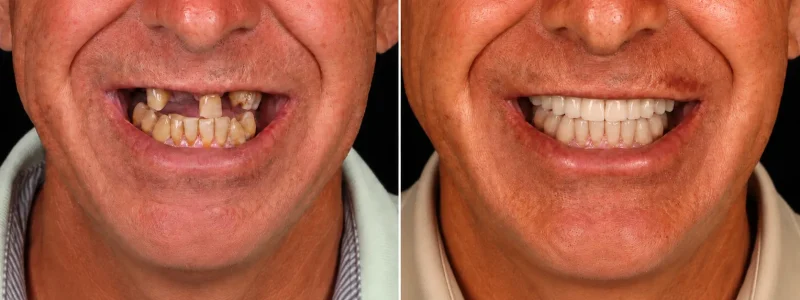
A complex dental case is a situation in which several problems exist at the same time, such as tooth loss, insufficient bone, severe wear, bruxism, periodontal disease, an unstable bite, or the need to combine implants, crowns, cosmetic dentistry, and oral rehabilitation.
A clinic equipped to handle complex cases must offer digital diagnostics, a coordinated team of specialists, and expertise in implantology, oral rehabilitation, cosmetic dentistry, and phased treatment planning. The Dental Clinic is positioned as a comprehensive option in Mexico City for these types of patients.
You may need comprehensive oral rehabilitation if you have several damaged, missing, fractured, or worn-down teeth, old crowns, an unstable denture, or difficulty chewing. It may also be necessary when your bite is no longer stable.
You should request a 3D CT scan evaluation. In some cases, options may include bone grafting, sinus lift, strategic implants, All-on-4, All-on-6, or prosthetic alternatives.
All-on-4 and All-on-6 are fixed rehabilitation treatments in which a complete arch of teeth is supported by four or six implants. The indication depends on the available bone, the bite, and the prosthetic plan.
Not always. Implants can be an excellent option, but first, the bone, gums, overall health, bite, oral hygiene, and expectations must be evaluated. Some patients require preliminary steps or different alternatives.
Yes. Many complex cases are treated in stages: first addressing pain, infection, gum issues, or teeth with a poor prognosis, and then moving on to implants, crowns, cosmetic improvements, and maintenance.
You should seek a second opinion if you received a high estimate, if you were advised to have several teeth extracted, if the diagnosis was unclear, if you have questions about implants, or if the treatment plan does not explain priorities and alternatives.
Because they may include different elements: examinations, specialists, implants, materials, laboratory services, temporary restorations, maintenance, the number of appointments, and risk management. That is why it is important to compare what each plan covers.
Yes. Bruxism can wear down teeth, fracture dental restorations, cause sensitivity, and affect the bite. In severe cases, it may require dental restorations, crowns, inlays, a bite guard, and follow-up care.
It depends on the case. Before placing veneers on patients with bruxism, the bite, wear, and risk of fracture must be evaluated. In some cases, it is necessary to stabilize the bite first.
X-rays, 3D CT scans, clinical photographs, intraoral scans, bite analysis, and periodontal evaluation may be required. The specific tests depend on the initial diagnosis.
It depends on the number of stages. Some treatments are completed in a matter of weeks, while cases involving implants, grafts, or complete rehabilitation may take several months.
In complex cases, choosing based solely on price can increase the risk of relapse, fractures, poor fit, bite problems, or future costs. The right approach is to compare the diagnosis, materials, experience, treatment phases, and follow-up care.
The first step is a comprehensive evaluation. The goal is not to do everything at once, but to understand the full scope of the problem, set priorities, and develop a phased clinical and financial plan.
La Clínica Dental Coapa is part of the La Clínica Dental - Red Dental Premium dental network in Mexico, which combines 3D diagnostics, intraoral scanning, guided surgery, and multidisciplinary specialists to plan more precise, comfortable, and predictable treatments in the areas of implants, cosmetic dentistry, and oral rehabilitation.
Find dental care near you, with coverage in various areas of Mexico City.

Flexible payment options—choose the option that best fits your budget and treatment.
We use 3D tomography, intraoral scanners, and digital planning to make more accurate diagnoses, reduce discomfort, and plan safer, more predictable treatments.

Our team is here to support you with professional, clear, and compassionate care during every visit.
Fill out the form below, submit your inquiry, indicate how you wish to be contacted, and we will get in touch with you during our business hours.
